
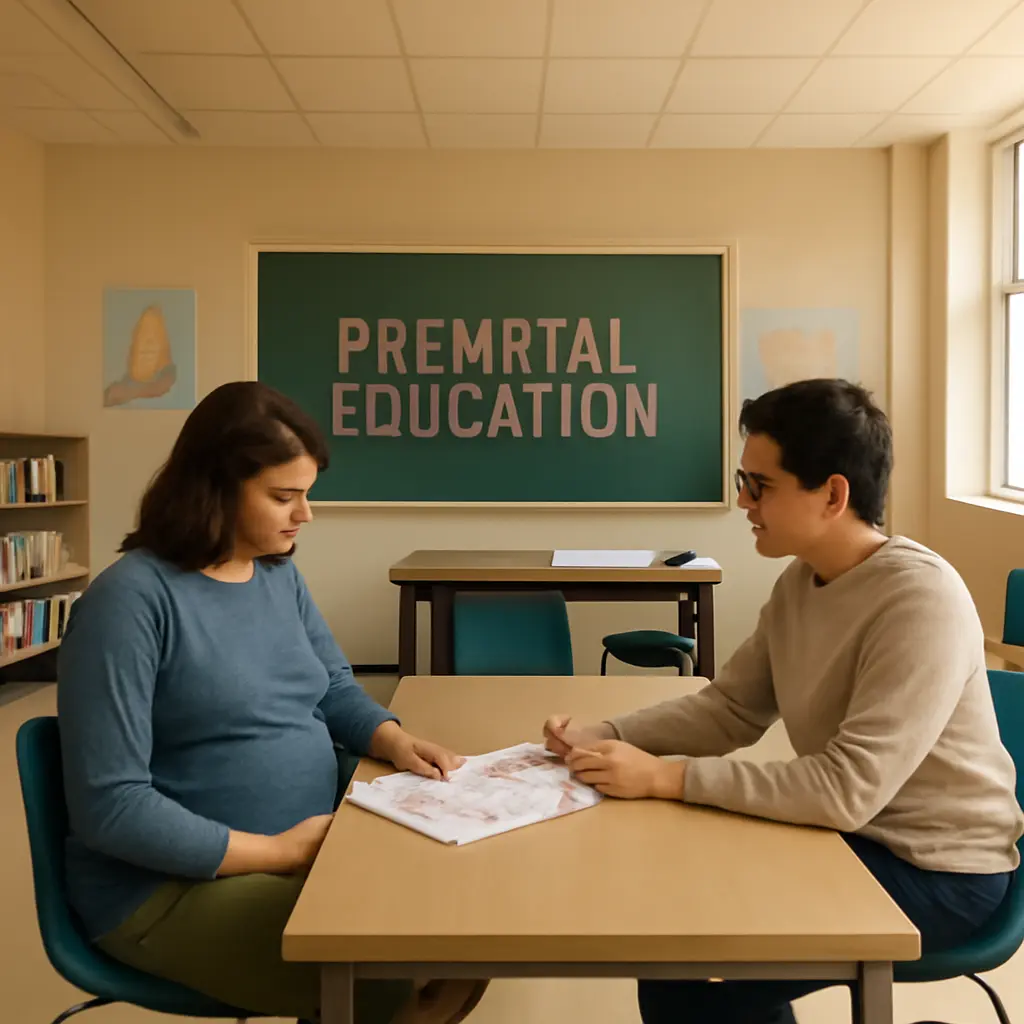
Prenatal education is practical learning that helps expectant parents prepare for pregnancy, birth, infant care, and the transition to parenthood. A beginner’s path works best when it starts with trustworthy, basic information, then moves through labor preparation, newborn care, and postpartum recovery before the due date. The World Health Organization recommends at least eight contacts with a health professional during pregnancy, while childbirth classes and other learning options can help families use those visits to ask informed questions and practice skills. The right plan depends on personal health, preferences, access, and how much time remains.
Prenatal education: definition, purpose, and evidence
Prenatal education is structured information or instruction offered during pregnancy to support informed decisions and preparation for birth and early parenting. It may be delivered by a midwife, nurse, physician, childbirth educator, public-health service, or reputable online program. It is not a substitute for individualized medical care: questions about symptoms, medications, tests, or pregnancy risks should be discussed with a qualified clinician.
The World Health Organization’s 2016 antenatal-care guideline recommends a minimum of eight pregnancy contacts, with the first ideally occurring in the first 12 weeks. These contacts are opportunities to discuss health, emotional well-being, nutrition, screening, and birth planning—not simply appointments to attend. Education can complement that care by helping parents understand the information and prepare questions. There is no single class schedule that suits every pregnancy, and evidence about the effects of particular education programs varies by program and outcome.
Antenatal appointments and informed questions
Antenatal care means health care provided during pregnancy. At appointments, clinicians may review health history, check the pregnant person’s well-being, recommend screening, and discuss changes or concerns. Parents can prepare by writing down questions, bringing a support person if desired, and asking what a recommendation means for their own circumstances. The Centers for Disease Control and Prevention advises people to seek prenatal care and discuss health conditions and medicines with a health professional; do not start or stop a prescribed medicine without medical guidance.
Choosing a class or learning format
Prenatal learning may be offered as in-person group classes, one-to-one sessions, hospital or community programs, virtual classes, or self-paced materials. A useful program explains who teaches it, what topics it covers, whether it reflects current clinical guidance, and how participants can get questions answered. Ask whether the class includes partners or support people, accessibility accommodations, language interpretation, and practical information about local maternity services. Online learning is convenient, but it should not replace care from a clinician familiar with the pregnancy.
Childbirth preparation: labor, birth, and decision-making
Childbirth preparation is learning about the possible course of labor and birth, comfort measures, pain-relief options, and how decisions may be made if circumstances change. A balanced class describes more than one birth scenario and avoids promising a particular outcome. Birth plans can help communicate preferences, but they are flexible discussion tools rather than guarantees; clinical needs and personal circumstances may change during labor.
Labor signs and when to contact maternity care
Learning about labor includes distinguishing possible contractions and other signs from symptoms that need prompt assessment. The timing and instructions for calling a maternity unit can differ by hospital, pregnancy history, and individual risk. Ask the care team which number to use, when to come in, and what to do if there is bleeding, fluid leakage, reduced fetal movement, severe pain, or another urgent concern. In an emergency, contact local emergency services rather than relying on a class or website.
Comfort measures, pain relief, and birth preferences
Comfort measures can include breathing and relaxation, movement, position changes, massage, or support from a chosen companion. Medical pain-relief options vary by setting and individual circumstances. The American College of Obstetricians and Gynecologists emphasizes that labor pain management should be individualized; patients can ask about benefits, limitations, availability, and how each option may fit their situation. Discuss preferences in advance while remaining open to adjustments during labor.
Birth settings and possible changes to the plan
Birth-setting education helps families compare the planned location, available staff and services, transfer arrangements, and how urgent care is accessed. A vaginal birth, assisted vaginal birth, and cesarean birth are different possible outcomes, and the appropriate approach depends on clinical factors. Ask the maternity team how decisions are explained, who will be present, and what support is available if the plan changes. For people with higher-risk pregnancies, individualized guidance is especially important.
Newborn care and feeding: practical skills before birth
Newborn-care education covers everyday care and safety during a baby’s first weeks. Practicing basic skills before the due date can make the first days less unfamiliar, but parents should expect to learn through experience and seek help when needed. In the United States, the American Academy of Pediatrics recommends that babies sleep on their backs on a firm, flat, noninclined sleep surface, without soft bedding or other loose items in the sleep space.
Safe sleep and everyday newborn handling
Safe-sleep learning focuses on reducing hazards during sleep and helping caregivers set up a suitable sleep space. The AAP recommends room-sharing without bed-sharing, ideally for at least the first six months, and advises against placing pillows, blankets, or soft objects in an infant’s sleep area. Families should also learn how to support a newborn’s head and neck, use a properly installed car seat, and follow local guidance for bathing and cord care. Ask a clinician or certified car-seat technician for help with specific questions.
Breastfeeding, chestfeeding, and formula-feeding support
Feeding education can introduce feeding cues, positioning, responsive feeding, and where to find practical support. The World Health Organization recommends exclusive breastfeeding for the first six months when possible, followed by complementary foods alongside continued breastfeeding. Feeding choices and circumstances differ, and families using formula also benefit from instruction on safe preparation and responsive feeding. Ask the maternity team or a qualified lactation professional how to access help after birth, including support for pain, latch difficulties, milk supply concerns, or feeding transitions.
Recognizing newborn concerns
A newborn-care class should explain how and where to get advice about feeding, temperature, jaundice, wet diapers, and changes in alertness or breathing. Parents should receive clear instructions for routine follow-up and urgent care from their baby’s health professional. Because newborns can become unwell quickly, do not rely on general class materials to assess a concerning symptom; contact a clinician or emergency service according to the advice provided for your location.
Postpartum preparation: recovery, mental health, and support
Postpartum preparation is planning for physical recovery, emotional health, and practical help after birth. It is a core part of prenatal education because the needs of the parent and baby continue after hospital discharge. The American College of Obstetricians and Gynecologists describes postpartum care as an ongoing process, with contact with an obstetric care provider within the first three weeks after birth and a comprehensive visit no later than 12 weeks.
Physical recovery and follow-up
Recovery depends on the pregnancy, birth, and individual health. Before the due date, ask what follow-up is planned, which symptoms require urgent attention, and whom to contact about pain, bleeding, wound care, blood pressure, or other concerns. ACOG recommends that postpartum care address physical recovery, infant feeding, sleep and fatigue, mood, contraception, and management of chronic conditions. Families should receive instructions tailored to their own care rather than assuming that one routine applies to everyone.
Emotional well-being and getting help
Emotional preparation includes discussing mood changes, stress, prior mental-health concerns, and available support with a clinician. The U.S. Centers for Disease Control and Prevention estimates that about 1 in 8 women with a recent live birth in the United States reported symptoms of postpartum depression; estimates vary by state and survey method. Persistent or severe distress deserves professional attention. Thoughts of harming oneself or the baby require immediate help through local emergency services or an appropriate crisis resource.
A practical support plan
A support plan identifies who can help with meals, household tasks, transport, older children, rest, and appointments. It can also list contact details for the maternity team, pediatric care, feeding support, and trusted family or community services. Discuss expectations with a partner or support people before birth, including how they can advocate, share caregiving, and notice when additional help may be needed.
A beginner’s timeline for learning before the due date
A learning timeline can make prenatal education manageable, but it should be adjusted for the due date, appointment schedule, personal preferences, and clinician’s advice. If pregnancy is already advanced, prioritize the topics most relevant to immediate decisions and newborn safety rather than trying to complete every class.
- Early pregnancy: establish prenatal care, discuss health history and medicines, and note questions about screening and well-being.
- Middle pregnancy: compare class options, learn about labor and pain-relief choices, and begin discussing birth preferences and support roles.
- Later pregnancy: review when to contact the maternity unit, practice newborn safety and feeding basics, and confirm transport and follow-up plans.
- Before the due date: prepare a flexible postpartum support plan, save key contact numbers, and clarify any unanswered medical questions with the care team.
A simple chart can help organize the plan: list each topic—appointments, labor, newborn safety, feeding, and recovery—alongside a trusted source, a question to ask, and the person responsible for following up. This makes learning visible without turning preparation into a test or a checklist that must be completed perfectly.
Conclusion: use prenatal education to prepare, not predict
A beginner’s prenatal education path starts with regular antenatal care, adds balanced childbirth preparation, builds newborn-care and feeding knowledge, and makes space for postpartum recovery and emotional support. Evidence-based guidance from the World Health Organization, the CDC, the AAP, and ACOG can help families identify useful questions, while clinicians provide advice tailored to an individual pregnancy. Choose one reliable learning resource, bring questions to the next appointment, and make a flexible plan for birth and the weeks afterward.
Sources: World Health Organization, WHO recommendations on antenatal care for a positive pregnancy experience, 2016, https://www.who.int/publications/i/item/9789241549912; Centers for Disease Control and Prevention, Planning for Pregnancy, https://www.cdc.gov/pregnancy/about/index.html; American College of Obstetricians and Gynecologists, Pain Relief During Labor and Delivery, https://www.acog.org/womens-health/faqs/pain-relief-during-labor-and-delivery; American Academy of Pediatrics, Sleep-Related Infant Deaths: Updated 2022 Recommendations for Reducing Infant Deaths in the Sleep Environment, https://publications.aap.org/pediatrics/article/150/1/e2022057990/188304/Sleep-Related-Infant-Deaths-Updated-2022; World Health Organization, Infant and young child feeding, https://www.who.int/news-room/fact-sheets/detail/infant-and-young-child-feeding; American College of Obstetricians and Gynecologists, Optimizing Postpartum Care, https://www.acog.org/clinical/clinical-guidance/committee-opinion/articles/2018/05/optimizing-postpartum-care; Centers for Disease Control and Prevention, Depression Among Women, https://www.cdc.gov/reproductive-health/depression/