
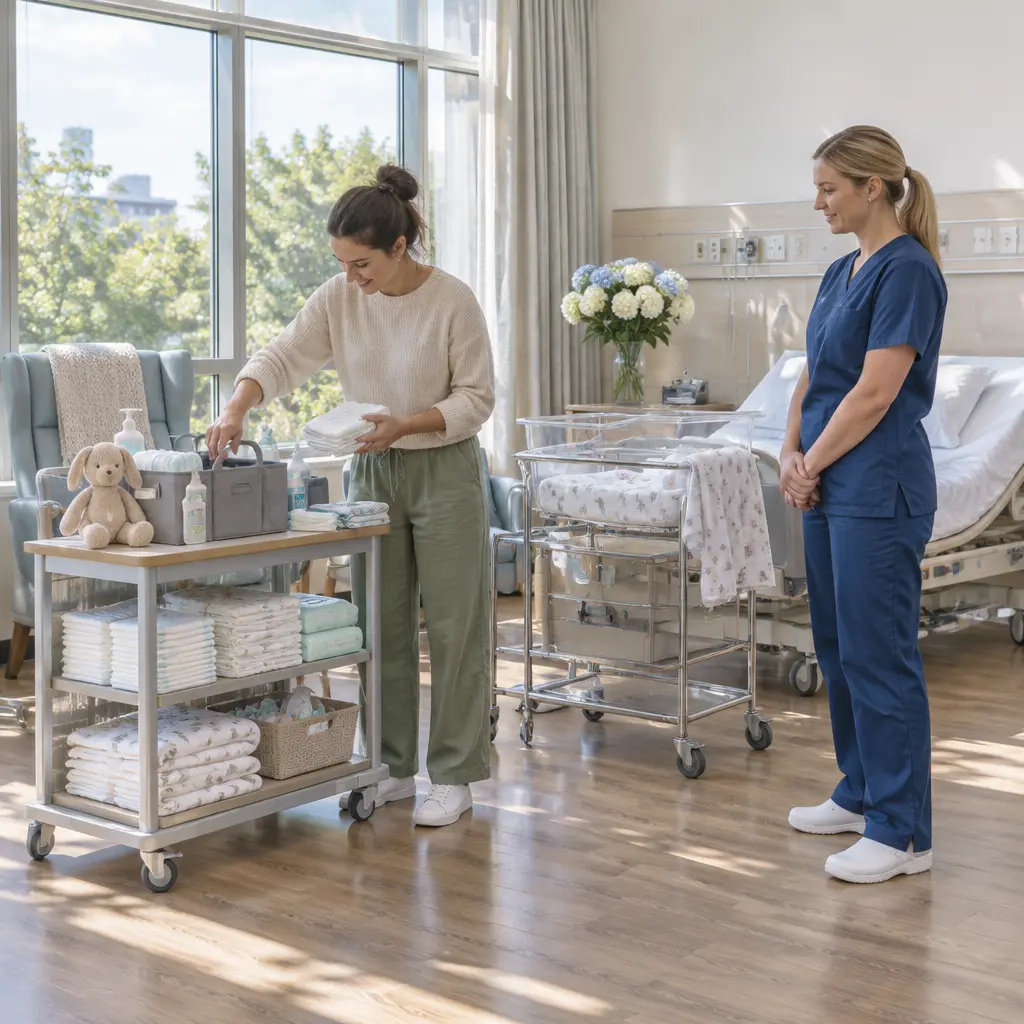
Preparing for a baby’s transition home from the neonatal intensive care unit (NICU) means practicing the care routines caregivers will use after discharge, with coaching and feedback from the clinical team. Rehearsal can help families build skills in feeding, medication administration, equipment use, and recognizing when to seek help; it also gives clinicians a chance to identify questions before the baby leaves. The American Academy of Pediatrics describes discharge planning as an individualized, family-centered process, not a single final lesson. Because premature and medically complex infants may need ongoing care, preparation should include hands-on practice, a written plan, and coordination with follow-up services.
NICU Discharge Preparation and Home-Care Rehearsal
Post-NICU transition preparation is the planned process of helping a family safely assume an infant’s care at home. Rehearsal is its practical component: caregivers perform everyday tasks in the hospital, while nurses and other clinicians observe, teach, and correct technique. The American Academy of Pediatrics’ policy statement on hospital discharge of the high-risk neonate emphasizes individualized planning, caregiver education, and coordination with community health services. The approach is especially relevant because the Centers for Disease Control and Prevention reports that about 1 in 10 U.S. babies is born preterm, and some preterm infants require specialized follow-up after hospitalization.
The specific rehearsal plan depends on the infant’s needs and the family’s circumstances. It may cover routine newborn care alone or include feeding support, medication schedules, oxygen or monitoring equipment, and emergency response. A useful bridge between practice and discharge is a written list of the baby’s care tasks, the caregiver responsible for each, and the clinical contact to use if a problem arises.
Family-centered discharge planning
Family-centered discharge planning means involving caregivers in decisions and tailoring teaching to their language, confidence, resources, and the infant’s medical needs. It is more than handing over written instructions: families should have opportunities to ask questions, demonstrate skills, and receive feedback. The AAP recommends assessing caregiver readiness and arranging appropriate medical and social support before discharge. In practice, that can include interpreter services, identifying who will provide care at home, and discussing transportation and access to prescriptions or supplies.
Rooming-in and supervised practice
Rooming-in allows a parent or other caregiver to stay with the infant in the hospital and take increasing responsibility for care while staff remain available. This supervised period can reveal practical issues that may be missed during a short demonstration, such as managing a night feeding, organizing medications, or responding to an alarm. The duration and format vary by NICU and infant; rooming-in is a teaching option, not a guarantee of readiness or a substitute for clinical assessment.
Caregiver Skills for the Home Transition
Home-care skills are the specific tasks caregivers need to perform reliably after discharge. Teaching is strongest when it combines explanation with demonstration, caregiver practice, and a check of understanding. The Agency for Healthcare Research and Quality’s health-literacy guidance supports using plain language and confirming understanding through teach-back: the caregiver explains or demonstrates the plan in their own words. This helps the team find gaps without treating questions as failure.
Feeding, growth, and feeding equipment
Feeding rehearsal covers the infant’s prescribed feeding method, pacing, positioning, preparation of expressed milk or formula, and any special instructions for fortification or tube feeding. Caregivers should practice the exact plan recommended by the NICU team and learn how to recognize the infant’s feeding cues and when to pause or seek advice. If a nasogastric tube or other feeding device is used, caregivers need hands-on instruction in the specific tasks they are authorized to perform, along with clear directions about displacement, blockage, or feeding intolerance. Growth goals and follow-up weighing should be written into the discharge plan.
Medication administration and safe sleep
Medication practice means accurately identifying each medicine, measuring the prescribed dose with the supplied device, following timing instructions, and knowing what to do if a dose is missed or vomited. A reconciled medication list should state the medicine’s name, dose, route, schedule, purpose, and prescribing contact. For sleep, the American Academy of Pediatrics recommends placing infants on their backs on a firm, flat, noninclined sleep surface without loose bedding or soft objects. NICU teams should explain how these safe-sleep recommendations apply to the individual infant’s home routine and distinguish medical equipment from items that belong in the sleep space.
Medical equipment and alarms
Equipment rehearsal prepares caregivers to use prescribed devices such as oxygen supplies, pulse oximeters, or feeding pumps. Training should include setup, routine checks, power or supply backup, alarm meanings, and whom to call for technical support. Caregivers should practice responding to the device while also assessing the baby; an alarm is a signal to follow the equipment-specific plan, not a diagnosis by itself. The discharge team should verify that equipment and supplies are available at home and that caregivers can demonstrate the essential tasks before leaving the hospital.
Discharge Readiness, Follow-Up, and Safety Nets
Discharge readiness is a shared clinical and family assessment that the infant’s needs can be met safely outside the hospital. It includes the infant’s medical stability under the treating team’s criteria, caregiver competence with required tasks, a workable home plan, and access to follow-up. There is no single readiness score that fits every baby. The AAP’s high-risk newborn discharge guidance supports individualized criteria and coordinated follow-up rather than relying on a calendar date alone.
A written plan and escalation instructions
A written discharge plan translates practice into a usable home reference. It should include feeding instructions, medications, equipment details, appointments, the infant’s usual baseline where relevant, and clear thresholds for contacting the care team or seeking urgent help. Caregivers should know whom to call during office hours and after hours. The team should also review warning signs specific to the infant rather than relying on a generic list.
Follow-up appointments and community support
Follow-up care links the NICU plan to the infant’s pediatrician and any specialists, home-health clinicians, early-intervention services, or equipment providers. Before discharge, caregivers should know the appointment dates, location, transportation plan, and which clinician is responsible for each aspect of care. The CDC notes that babies born before 37 weeks may have health needs requiring ongoing attention; the appropriate schedule depends on gestational age, medical history, and local clinical guidance. A confirmed appointment is more actionable than a general instruction to arrange follow-up later.
A practical rehearsal sequence
A simple sequence can help organize preparation without replacing the NICU’s individualized instructions:
- Ask the team for a written list of required home-care tasks and the person responsible for each.
- Watch a clinician demonstrate each task, then practice it while the clinician observes.
- Use teach-back to explain the feeding, medication, equipment, and escalation plans.
- Practice a realistic routine, including nighttime care when feasible, and identify what remains difficult.
- Confirm prescriptions, supplies, equipment, appointments, transportation, and after-hours contacts before discharge.
Conclusion: Rehearsal Turns Discharge Instructions Into Practice
Post-NICU transition preparation works best when family-centered discharge planning leads to supervised rehearsal, demonstrated caregiver skills, and a coordinated follow-up plan. Feeding, medication, safe sleep, and equipment routines should be practiced in the form the family will use at home, with clear instructions for questions and urgent concerns. Families can ask their NICU team to schedule hands-on practice, use teach-back, and confirm every appointment and supply before discharge. These steps support a safer, more confident transition while recognizing that each infant’s needs are different.
Sources: American Academy of Pediatrics, “Hospital Discharge of the High-Risk Neonate,” Pediatrics, 2008, https://publications.aap.org/pediatrics/article/122/5/1119/71911/Hospital-Discharge-of-the-High-Risk-Neonate; Centers for Disease Control and Prevention, “Preterm Birth,” https://www.cdc.gov/maternal-infant-health/preterm-birth/index.html; Agency for Healthcare Research and Quality, “Health Literacy Universal Precautions Toolkit,” https://www.ahrq.gov/health-literacy/improve/precautions/index.html; American Academy of Pediatrics, “Sleep-Related Infant Deaths: Updated 2022 Recommendations for Reducing Infant Deaths in the Sleep Environment,” Pediatrics, 2022, https://publications.aap.org/pediatrics/article/150/1/e2022057990/188304/Sleep-Related-Infant-Deaths-Updated-2022