
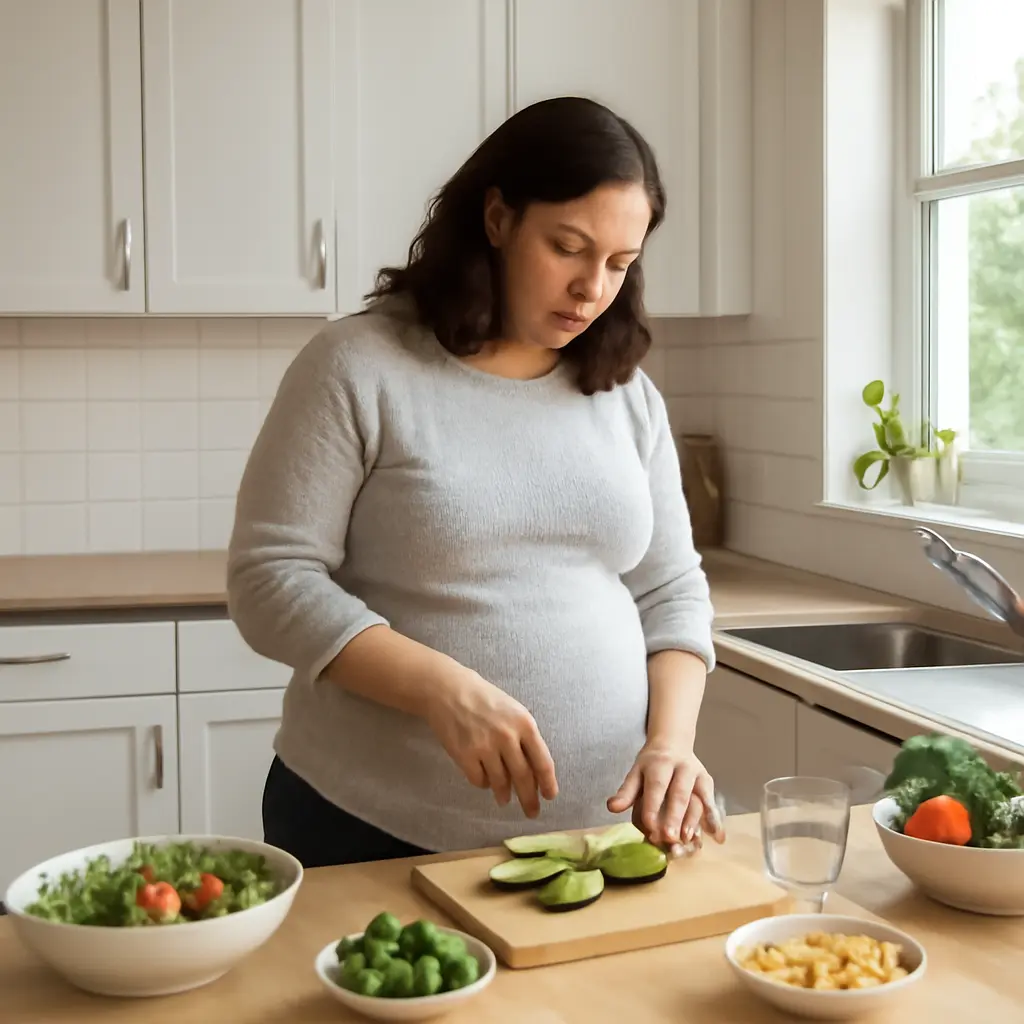
Pregnancy nutrition means meeting the pregnant person’s increased needs for energy and specific nutrients while supporting fetal growth; it does not mean literally eating twice as much. The U.S. Centers for Disease Control and Prevention (CDC) says most people need no additional calories in the first trimester, about 340 extra calories per day in the second, and about 450 in the third. A healthy pattern emphasizes nutrient-dense foods, appropriate weight gain, food safety, and prenatal care—not a blanket “eating for two” rule. Here is what guidance says about calories, key nutrients, weight gain, supplements, and common dietary concerns.
Pregnancy calorie needs depend on trimester and individual circumstances
The National Academies’ dietary reference framework and CDC guidance distinguish increased nutrient needs from a doubling of energy needs. For a singleton pregnancy, the CDC’s general estimates are no extra calories in the first trimester, around 340 extra calories daily in the second, and around 450 in the third, compared with prepregnancy intake. These are averages, not personal prescriptions: activity, prepregnancy body size, pregnancy symptoms, fetal growth, and whether the pregnancy involves multiples can alter individual needs.
What “extra calories” means in practice
An additional 340 or 450 calories is a modest increase, not a second full meal. It can be met with nourishing options such as yogurt and fruit, whole-grain toast with nut butter, or beans and avocado, according to appetite and dietary preferences. Calorie counts should not become a rigid target: a clinician or registered dietitian can help interpret needs when nausea, food insecurity, diabetes, or other health conditions affect eating.
Weight gain is assessed by starting point and pregnancy type
The National Academy of Medicine’s 2009 recommendations for singleton pregnancies relate total gain to prepregnancy body mass index (BMI). They suggest 28–40 pounds for people classified as underweight, 25–35 pounds for those in the normal BMI range, 15–25 pounds for those classified as overweight, and 11–20 pounds for those classified as obese. These ranges are population-level guidance, not a judgment or a substitute for individualized care; recommendations for twins differ. Weight trends are best discussed with a prenatal care professional rather than managed through restrictive dieting.
Pregnancy nutrient needs rise even when calorie needs do not double
Nutrients support blood-volume expansion, the placenta, and fetal development, so some requirements rise substantially even as energy needs increase only modestly. A varied diet can provide many nutrients, while prenatal supplements may help cover specific gaps. The appropriate product and dose depend on diet, health history, lab results, and local clinical guidance.
Folate and folic acid help prevent neural tube defects
Folate is a B vitamin; folic acid is the form used in many supplements and fortified foods. The CDC recommends 400 micrograms of folic acid daily for people who could become pregnant, in addition to eating foods containing folate, because neural tube development occurs very early—often before pregnancy is recognized. During pregnancy, the National Institutes of Health Office of Dietary Supplements lists a folate recommended dietary allowance of 600 micrograms dietary folate equivalents per day. Some people need a clinician-prescribed dose above the standard amount, so high-dose supplementation should not be self-directed.
Iron needs increase as maternal blood volume expands
Iron helps make hemoglobin, the protein in red blood cells that carries oxygen. The NIH Office of Dietary Supplements gives a pregnancy recommended dietary allowance of 27 milligrams per day, compared with 18 milligrams for nonpregnant adults aged 19–50. Iron is found in meat and seafood as well as beans, lentils, fortified cereals, and other plant foods; vitamin C can improve absorption of plant-based iron. Because supplements can cause side effects and excess iron can be harmful, discuss dosage and anemia screening with a prenatal clinician.
Iodine, choline, calcium, and vitamin D have distinct roles
Iodine supports thyroid hormone production and fetal brain development; the American Thyroid Association recommends a daily supplement containing 150 micrograms of iodine for many pregnant and breastfeeding people, while individual care may differ. Choline is involved in cell structure and development; the NIH lists an adequate intake of 450 milligrams per day during pregnancy. Calcium supports fetal bones and teeth, with a recommended intake of 1,000 milligrams daily for adults aged 19–50, while vitamin D supports calcium absorption and bone health. Food sources include dairy or fortified alternatives, eggs, fish, legumes, and fortified foods, but a prenatal vitamin may not contain enough of every nutrient.
Omega-3 fats and seafood can be part of a healthy pattern
Seafood supplies protein and nutrients including iodine and omega-3 fats. The U.S. Food and Drug Administration and Environmental Protection Agency advise pregnant or breastfeeding people to eat 8–12 ounces per week of a variety of lower-mercury seafood. Choices such as salmon, sardines, shrimp, and trout can fit this advice; avoid fish listed as highest in mercury, including king mackerel, marlin, orange roughy, shark, swordfish, tilefish from the Gulf of Mexico, and bigeye tuna. Follow local advisories for self-caught fish.
A balanced pregnancy eating pattern combines variety with food safety
No single menu suits every pregnancy. A practical pattern includes vegetables and fruit, whole grains, protein foods, and sources of calcium, alongside fluids and foods that are safe to eat. Cultural traditions, allergies, vegetarian or vegan choices, budget, nausea, and access to food all matter; support should adapt to these circumstances rather than assume one ideal diet.
Food safety reduces avoidable infection risks
Pregnancy can increase the risk of serious illness from certain foodborne infections. The CDC advises avoiding unpasteurized milk and foods made from it, raw or undercooked meat and eggs, and refrigerated pâté or meat spreads unless canned or shelf-stable. Deli meats and hot dogs should be heated to 165°F or until steaming hot. Wash produce, keep raw foods separate from ready-to-eat foods, and refrigerate perishable items promptly. These precautions are especially relevant to Listeria, which can cause severe pregnancy complications.
Caffeine and alcohol require different guidance
The American College of Obstetricians and Gynecologists (ACOG) advises keeping caffeine below 200 milligrams per day during pregnancy; caffeine content varies widely across coffee, tea, soda, energy drinks, and chocolate. For alcohol, the CDC states that there is no known safe amount, no safe time, and no safe type during pregnancy. Avoiding alcohol is the safest choice. Anyone concerned about alcohol use can ask a healthcare professional for confidential, nonjudgmental support.
Vegetarian, vegan, and culturally specific diets can be planned
A well-planned vegetarian or vegan diet can include beans, lentils, tofu, nuts, seeds, whole grains, and fortified foods, but attention to vitamin B12, iron, iodine, calcium, vitamin D, choline, and omega-3 fats is important. Vitamin B12 is naturally present mainly in animal-derived foods, so people avoiding those foods need a reliable fortified source or supplement. A registered dietitian familiar with pregnancy can help build a practical plan that respects food traditions and identifies nutrients that may need monitoring.
Supplements and clinical care should be individualized
Prenatal vitamins are supplements, not substitutes for food or prenatal care. Products differ in their amounts of folic acid, iron, iodine, choline, and vitamin D; some do not include choline or contain enough calcium to meet daily needs. The NIH cautions that excessive intake of certain nutrients can cause harm. Bring supplement labels—including herbal products and high-dose vitamins—to a clinician or pharmacist for review, and do not use supplements to treat a diagnosed deficiency without professional guidance.
When symptoms or health conditions change nutrition needs
Persistent vomiting, inability to keep fluids down, faintness, rapid weight changes, or concerns about fetal growth warrant prompt discussion with a healthcare professional. Diabetes, high blood pressure, anemia, gastrointestinal disorders, food allergies, and a history of eating disorders can also call for tailored nutrition support. For people facing difficulty affording food, a prenatal care team can help connect them with local assistance programs; in the United States, WIC provides nutrition support for eligible pregnant and postpartum participants.
Conclusion: pregnancy nutrition is about quality, not doubling portions
“Eating for two” is outdated when it implies doubling food intake. Calorie needs generally rise gradually—often by about 340 calories in the second trimester and 450 in the third—while needs for nutrients such as folate, iron, iodine, and choline deserve specific attention. A balanced, culturally appropriate diet, safe food handling, sensible supplement use, and individualized prenatal guidance matter more than a universal calorie rule. For personal advice, review your diet and supplements with your prenatal clinician or a registered dietitian, and seek support early if symptoms or access to food make eating difficult.
Sources: Centers for Disease Control and Prevention, Weight Gain During Pregnancy, https://www.cdc.gov/maternal-infant-health/pregnancy-weight/; Centers for Disease Control and Prevention, About Folic Acid, https://www.cdc.gov/folic-acid/about/; National Academies of Sciences, Engineering, and Medicine, Weight Gain During Pregnancy: Reexamining the Guidelines, https://nap.nationalacademies.org/catalog/12584/weight-gain-during-pregnancy-reexamining-the-guidelines; National Institutes of Health Office of Dietary Supplements, Dietary Supplements and Life Stages: Pregnancy, https://ods.od.nih.gov/factsheets/Pregnancy-HealthProfessional/; American Thyroid Association, Iodine Supplementation During Pregnancy and Lactation, https://www.thyroid.org/iodine-deficiency/; U.S. Food and Drug Administration and U.S. Environmental Protection Agency, Advice About Eating Fish, https://www.fda.gov/food/consumers/advice-about-eating-fish; Centers for Disease Control and Prevention, Preventing Listeria Infection, https://www.cdc.gov/listeria/prevention/; American College of Obstetricians and Gynecologists, Nutrition During Pregnancy, https://www.acog.org/womens-health/faqs/nutrition-during-pregnancy; Centers for Disease Control and Prevention, About Alcohol Use During Pregnancy, https://www.cdc.gov/alcohol-pregnancy/about/; U.S. Department of Agriculture, WIC: Women, Infants, and Children, https://www.fns.usda.gov/wic